
Kitesurfing in Kenya: The Ultimate Guide (2026)


Warm water. Reliable wind. Beautiful beaches. Epic downwinders. If you're looking for your next kitesurfing adventure, Kenya should be high on your list.
While Kenya is famous for its incredible safaris and wildlife, its Indian Ocean coastline is one of Africa's best kept secrets. Stretching over 500 kilometres, you'll find everything from shallow turquoise lagoons and reef breaks to long, uncrowded beaches, all backed by palm trees and warm tropical weather.
Whether you're taking your very first lesson or chasing perfect wave conditions, Kenya offers something for every level of rider.
Why kitesurf in Kenya?
Kenya combines everything most kitesurfers are looking for:
Reliable trade winds during two main seasons
Warm water all year (26-29°C)
Air temperatures between 28-32°C
Flat water lagoons and wave riding
Uncrowded beaches
Friendly local kite community
Incredible wildlife and safari opportunities
The best part? You don't have to choose between an unforgettable beach holiday and an African safari, you can easily combine both.
When is the best time to kitesurf in Kenya?
Kenya has two excellent kite seasons each year, thanks to the Indian Ocean trade winds.
Kusi Season (July - September)
The Kusi is the stronger South Easterly monsoon bringing bigger swells and stronger winds from July through September.
Typical conditions
20-30 knots
Larger swell
Better wave riding
More challenging conditions for experienced riders
Kaskazi Season (late December - April)
The Kaskazi is the North Easterly trade wind and brings warm temperatures, sunshine and steady wind.
Typical conditions
15-25 knots
Flat water
Warm, sunny days
Perfect for beginners and free riders
Where are the best places to kitesurf in Kenya?
Let's be upfront, we're a little biased! We think Che Shale is one of the best kitesurfing destinations in Kenya (it would be strange if we didn't!).
But every rider is looking for something different. Some people want lively beach bars and lots of other kiters on the water. Others want empty beaches, nature and plenty of space.
Rather than telling you one place is "the best", here's our honest guide to Kenya's top kite destinations.
Best for: Space, nature, all levels and a relaxed atmosphere.
We won't pretend to be completely objective here - we love this place.
Che Shale is the original kite school in East Africa. Owner Justin introduced kitesurfing to the Kenyan coast back in 1999, and the school has been running here ever since.
Che Shale sits on a spectacular stretch of coastline around 25 km north of Malindi. The bay is wide and deep enough that you can ride at both high and low tide, which isn't the case at most Kenyan kite spots. During Kusi season (July - September) that means rideable wind from sunrise to sunset; during Kaskazi (late December - April) you're on the water from around lunchtime, once the wind fills in. Either way, you get far more time on the water and far less time watching the tide clock.

The onsite kite centre runs lessons for every level, with full equipment included and a safety boat on the water throughout. The team's on hand to help launch, land and pump kites, and downwinders run throughout the season for anyone wanting to explore further afield.
Getting there: Malindi airport is the closest, around 45 minutes south. Jambojet runs several flights a day between Nairobi and Malindi, making it an easy hop if you're arriving internationally via Nairobi.


Pros
Only kite school in the bay - genuinely never crowded
Rideable at both high and low tide - far longer sessions than many Kenyan spots
Suitable for complete beginners through to advanced riders
Full equipment, safety boat and launch/land support included
Huge, uncrowded beach
Relaxed, beachfront atmosphere
Cons
Quiet nightlife
Remote location (though we see that as part of the appeal)
🌴 Watamu
Best for: Freestyle, marine life and combining kiteboarding with other water sports.
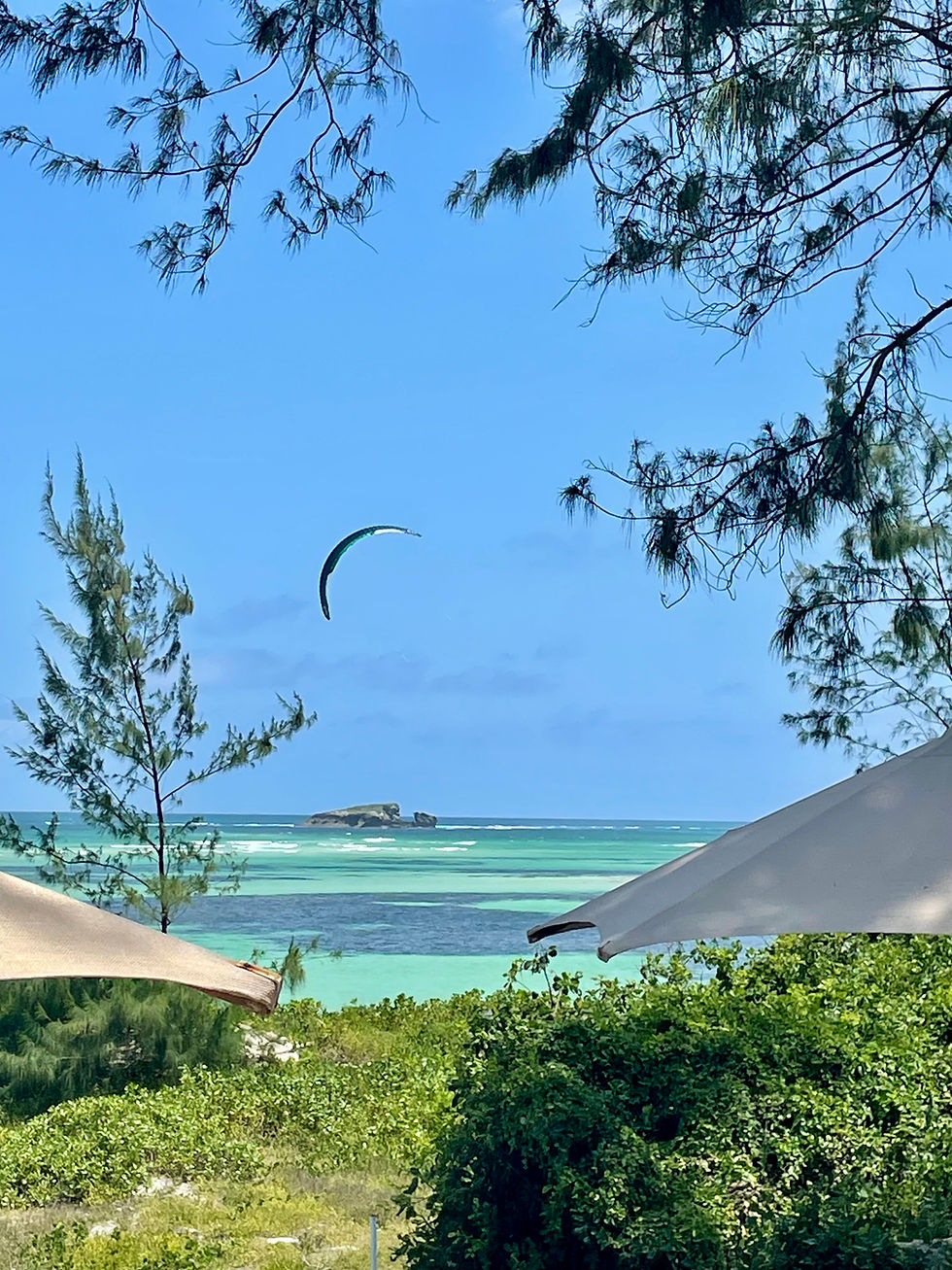
Watamu is famous for its beautiful lagoon protected by an offshore reef. The flat water conditions make it popular with freestyle riders, while the nearby marine park offers fantastic snorkelling and diving.
The town has a great selection of restaurants, cafés and accommodation, making it a great all round destination.
Getting there: Malindi airport is closest, around 20-30 minutes by road. Mombasa airport is often the cheaper flight option, at roughly a 2 hour drive.
Pros
Beautiful lagoon
Excellent snorkelling and diving
Great choice of restaurants
Relaxed coastal town
Cons
Tidal restrictions
Can become busy during peak holidays
🌿 Kilifi
Best for: A laidback coastal escape.
Kilifi has quietly become one of Kenya's coolest coastal towns. It has a creative atmosphere, boutique cafés, creekside sunsets and a slower pace of life than the larger beach resorts.
Although it isn't as well known internationally as Diani or Watamu, many travellers fall in love with Kilifi's relaxed vibe.
Getting there: Both Malindi and Mombasa airports are around an hour's drive away.
Pros
Beautiful creek
Great cafés and restaurants
Relaxed atmosphere
Easy to combine with other destinations
Cons
Smaller kite community
Fewer dedicated kite schools
🏄 Diani Beach
Best for: Social kite trips, nightlife and lots of choice.
Diani is Kenya's best known kitesurfing destination and attracts riders from all over the world.
You'll find numerous kite schools, beach bars, restaurants and accommodation options. During the wind seasons there's usually a lively atmosphere both on and off the water.
Getting there: Ukunda airstrip is closest, just 5 km away. Mombasa's international airport is around an hour by road.
Pros
Lots of kite schools
Great nightlife
Excellent restaurants
Large kite community
Cons
Can become crowded
More commercial than other destinations
Tides can limit riding time
Why not visit more than one?
One of the best things about kitesurfing in Kenya is that every destination has its own personality.
If you're travelling all the way to East Africa, we'd actually recommend splitting your holiday between a couple of different spots.
Here's how we'd plan it...
📍 A North to South Kite Adventure (or reverse it 🔄)
Lamu (Optional)
If you've got time, begin your adventure in the magical Lamu Archipelago. Wander through UNESCO-listed Old Town, sail on a traditional dhow and soak up centuries of Swahili culture.
⬇️
Che Shale (Yes, we're still a little biased... 😉)
Spend a few days enjoying uncrowded beaches, consistent wind and long sessions on the water before heading further south.
⬇️
A true beach to bush experience - around 2 hours from both Che Shale and Watamu you will find yourself at Sala Gate and the start of Tsavo East National Park.
⬇️
Watamu
Explore the famous lagoon, enjoy the cafés and restaurants, and spend a day snorkelling in the marine park.
⬇️
Kilifi
Slow things down with sunset dhow cruises, paddle boarding on Kilifi Creek and excellent food.
⬇️
Diani Beach
Finish your trip with Kenya's biggest kite community, lively nightlife and plenty of action both on and off the water.

Is Kenya suitable for beginners?
Absolutely. Many of Kenya's kite spots offer warm, shallow water with plenty of space to learn. Professional instructors are available throughout the coast, while more experienced riders can progress into jumping, freestyle and wave riding.
Because the water stays warm throughout the year, most people kite in board shorts or a swimsuit without needing a wetsuit.
What else can you do?
One of Kenya's biggest advantages is that your holiday doesn't have to revolve entirely around kitesurfing.
During your stay you can also enjoy:
Safari in Tsavo National Park
Snorkelling and diving
Paddle boarding
Deep sea fishing
Dhow sailing
Turtle conservation projects
Fresh seafood
Local markets
Historic Malindi
Kilifi Creek
Lamu Old Town
Many visitors split their holiday between a safari and the coast - it's one of Africa's classic travel experiences.
Why we love kitesurfing in Kenya
We'll admit it, we're biased.
But after years of watching guests arrive from all over the world, we still think Kenya offers something genuinely special.
It's not just the reliable wind or the warm water. It's finishing a kite session and watching the sun disappear with a fresh seafood dinner waiting. It's spending the morning on the water and the next day watching elephants on safari. It's meeting friendly locals, discovering quiet beaches and leaving with a tan that lasts far longer than your holiday.
Whether you choose Che Shale, Diani, Watamu, Kilifi, or a combination of them all, we're confident you'll understand why so many kitesurfers return to Kenya year after year.
Comments